“Call wall” and “put wall” are not magic lines. In a GEX map they are the strikes where call-side and put-side dealer gamma pile up the most. Futures traders care because that is where hedging flow is most likely to resist or attract price during the RTH session.
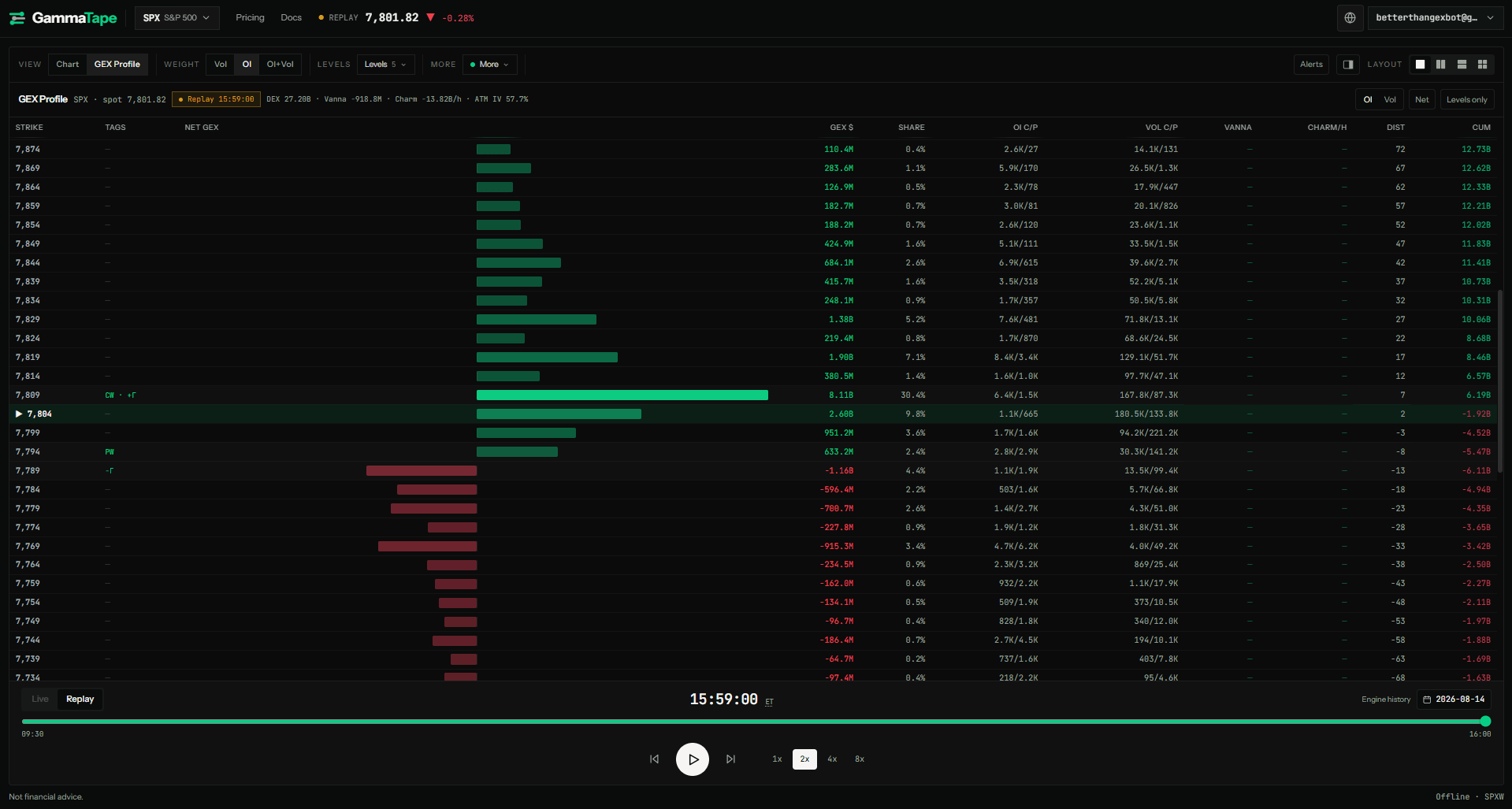
Call wall meaning
The call wall is typically the strike with the largest positive call gamma (or the densest call-side exposure in your GEX convention). Above spot it often behaves like resistance or a magnet: dealers short calls hedge by selling into strength as price approaches, which can slow a rally — until the wall is absorbed and the hedge flips.
Put wall meaning
The put wall is the mirror below spot: dense put-side gamma. Into weakness, short-put dealers may buy dips to stay delta-neutral — a cushion — until puts are crushed or rolled and that support disappears. Crash days are when put walls get tested hardest and can migrate down fast.
How ES/NQ traders actually use them
- Frame the day: put wall / spot / call wall as a three-line map at the open.
- Combine with zero gamma — walls without a regime context are incomplete.
- Prefer OI walls for structure, volume walls for “what is being fought right now.”
- On ES, read SPX walls; on NQ, read NDX — do not mix the products.
Next: zero gamma as the flip → /blog/zero-gamma-level-trading · full 0DTE primer → /blog/0dte-gamma-exposure-explained